A familiar street is sometimes harder to photograph than a place you’re seeing for the first time. Not because there’s nothing to capture. You just know exactly what stands there, where people walk and where the cars park. Your eyes switch to autopilot and you feel you saw it all long ago.
So try narrowing your view for a while. Before you leave, pick one colour, and for the whole walk photograph only frames in which it plays an important part.
One colour. One hour. One small series.
The rules are simple. Choose the colour beforehand and don’t change it along the way. Give yourself an hour and try to bring back at least twelve usable photos. The chosen colour doesn’t have to fill the whole picture. It can be on a façade, a door, a shop window, an umbrella, a passer-by’s clothes or just in a reflection in glass. What matters is that the photo wouldn’t work the same without it.
What I like about this game is that it needs no special place or equipment. You can try it in the centre of Prague, on a housing estate or on the way home from work. A camera or a phone is enough. It’s actually more interesting to set out into a street you know well. That’s exactly where you find out how many small things you usually overlook.
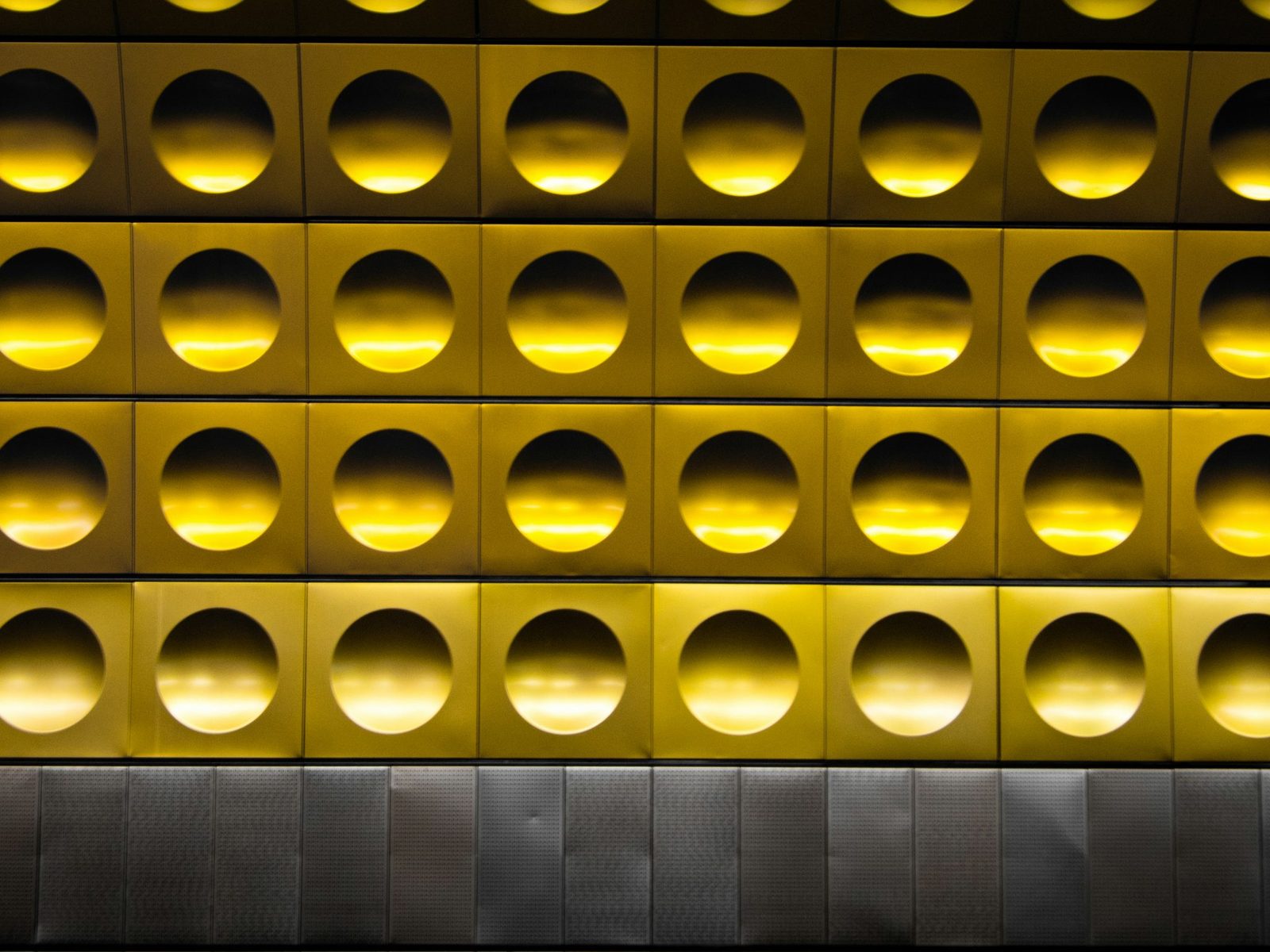
Don’t stop at big blocks of colour. Start with a whole yellow wall if you like, but then look for smaller things: a postbox, a price tag behind a shop window, a shoelace, a sticker on a post or a strip of light on wet cobbles. Sometimes the colour can be the main subject, other times just a small point that holds the whole frame together.
If you want to make the task harder, ban the easiest option. For blue don’t count the sky, for green the grass, for red a whole tram. Suddenly you’ll have to get closer, change your angle or wait a while until a person appears in the right spot.
Notice the surrounding colours too. The chosen colour can blend into similar shades, or conversely stand out sharply against its complementary colour. Yellow makes a strong contrast with purple, red with green and blue with orange. There’s no need to walk around Prague with a colour wheel in your hand. Just notice when the colour disappears in the frame and when it draws the eye first.
When you get back, don’t delete everything that isn’t exceptional on its own. The point of this walk often only shows in the whole series. Pick nine photos and arrange them in a three-by-three grid. Alternate a wide shot, a medium shot and a detail. Side by side, shots that would go unnoticed alone can work together.
When editing, keep similar brightness, contrast and white balance, but don’t try to force all the shades into one. The red on a peeling door will be different from the red on a shiny car. It’s exactly the differences in material, light and the age of the surface that give the final series its variety.