Trams used to get in my way a lot. I’d set up a photo of a street, wait for a person in the right spot, and at that moment a tram would drive through the whole frame. All I could do was wait for it to disappear.
Then one day I opened two shots side by side: one with the tram in the middle of the frame and one after it had gone. The first had colour, movement and a clear main subject. The second was cleaner, but also much emptier. The problem wasn’t the tram. The problem was that I hadn’t planned for it from the start.
Don’t wait for the tram to leave. Wait for it to arrive.
The rails tell you in advance where it will pass. So you can prepare the composition, focus on the spot where you want to catch it and leave enough room in the frame. When the tram appears, you won’t be chasing it down the street with the lens. You’ll just wait for it to drive exactly where you need it.
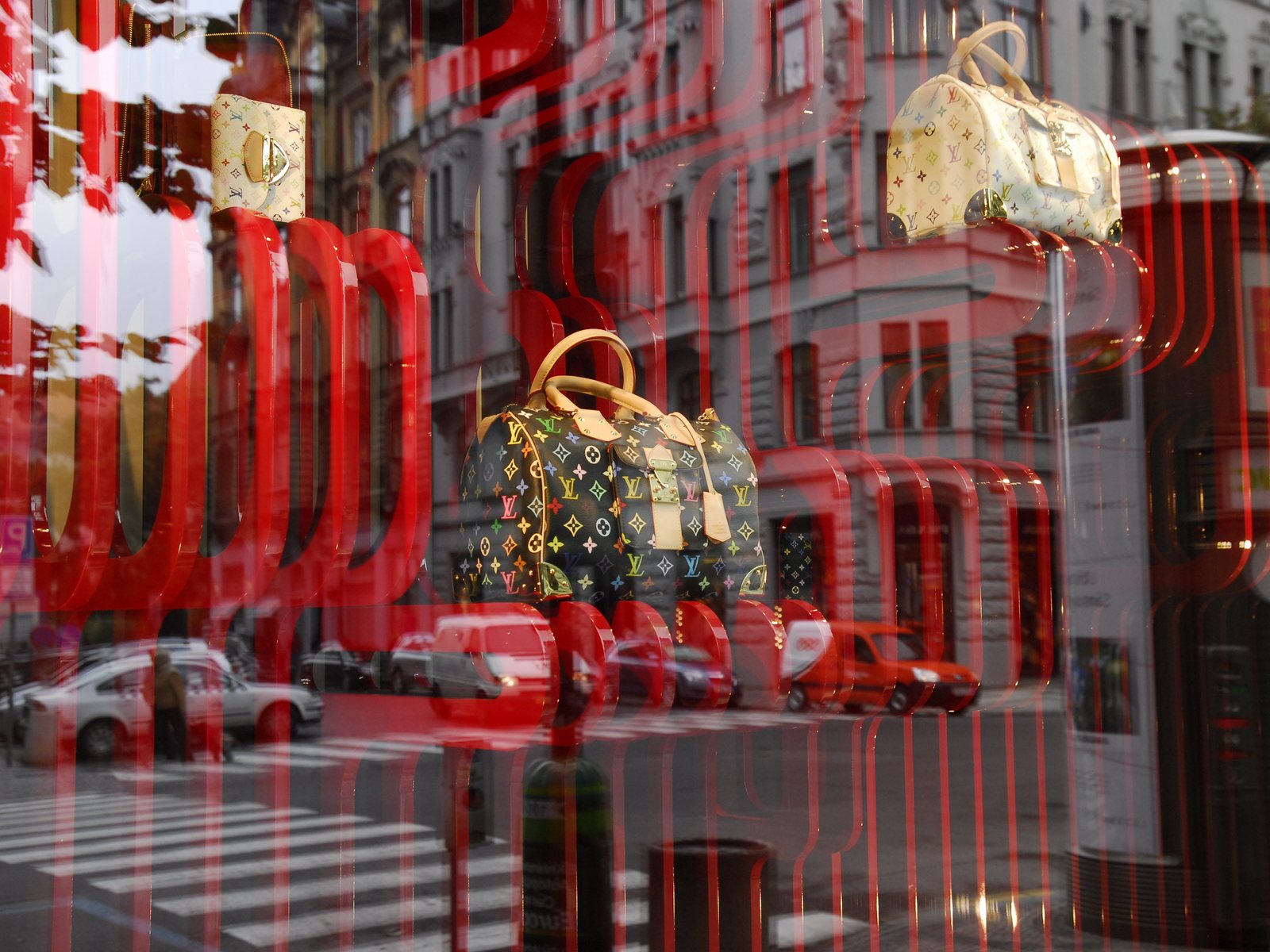
Red works well in Prague. It stands out against the light façades of Malá Strana, the green of the trees and the grey cobbles. And the tram doesn’t have to be whole in the photo. Sometimes its front coming out of a bend, a red stripe between the houses or a reflection in a shop window is enough. What matters is that it’s clear why it’s in the frame exactly there.
Prague’s tram fleet is varied. In the streets you meet older cars and modern trams, and the traditional red-and-white livery isn’t the same on every type. If you’re waiting for a specific historic type, it may take longer. But you don’t need it for a good photo. A current tram can create a strong point of colour too, if you prepare a good background for it.
You can start on Malostranské náměstí. Trams pass here between historic houses and the church of St Nicholas. Towards Malostranská, moreover, the track runs through a narrow passage where the car usually slows and for a moment finds itself squeezed between the houses. A wider frame shows the square and the tram; a longer focal length lets you separate the car from the busy surroundings and draw attention to one spot.
Most Legií offers a different photo. From the pavement on the bridge you can catch a tram with the National Theatre in the background or let it pass through a frame with the river and part of the embankment. Here it pays to set up the scene in advance. The tram vanishes from the frame faster than you can work out where to place the theatre, the lamp and the passing cars.
On náměstí Míru the setting is more open. The square is dominated by the neo-Gothic church of St Ludmila and a tram can create a colourful foreground in front of its dark brick structure. You don’t have to concentrate only on the car. People at the stop, trees or the ordinary bustle of Vinohrady can fit into the photo. The result will feel less like a postcard and more like an ordinary day in the city.
Before you press the shutter, decide whether you want to freeze the movement or show it. A faster shutter speed freezes the tram sharp. A longer one turns it into a streak of colour and emphasises speed. You can also follow the tram with the camera as it moves: the car stays more legible and the surroundings blur. There’s no single correct setting. It depends on the speed of the tram, the amount of light and how strongly the movement should show in the shot.
At the same time, remember that a tram isn’t a prop and the driver doesn’t know about your shot. Don’t step onto the tracks for a photo, don’t step off the pavement into the road, and don’t back up while looking through the viewfinder without looking around. A tram can’t simply swerve around an obstacle. Choose a safe spot before you start thinking about composition.
Try staying at one spot for more than one tram. The first shot shows you what doesn’t work in the composition. On the second you fix it, and on the third you may catch the person, the light and the right position of the car all at once. There’s no need to run round half of Prague in an hour.