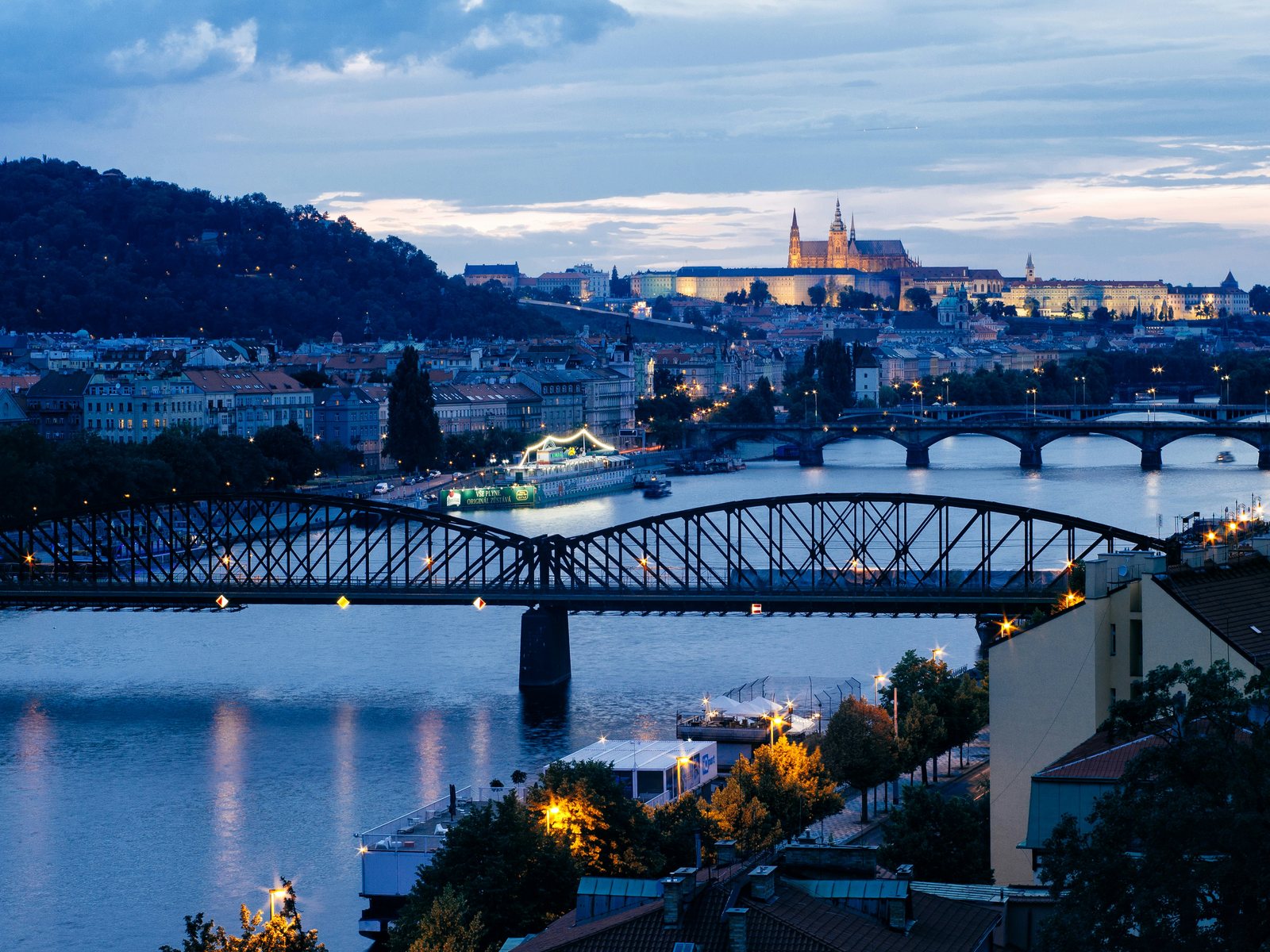
I used to set out for evening shoots only after dark. It seemed logical: I want to photograph Prague lit up, so I’ll wait for night. But in the pictures the lamps and windows then shone into an empty black sky. The city was lit, but the depth had gone from the photo.
A much more interesting moment comes a little earlier. The sun is already below the horizon, the sky takes on a blue tint and in the streets the lamps, shop windows and windows gradually come on. For half an hour or so the cold light of the sky meets the warm light of the city.
Don’t wait for the dark. Wait for Prague to light up.
The name blue hour is a little misleading. It doesn’t have to last an hour and it doesn’t start at the same time every day. It’s a photographer’s term for the darker part of dusk, not a precise astronomical figure. Its length changes with the season, the place and the conditions in the sky. So the time of sunset is only the start of your planning, not your arrival time.
The same moment also comes before sunrise. The morning blue hour offers quieter streets; in the evening one it’s easier to capture ordinary city life. In this article we’ll stay with the evening.
Arrive at the spot at least half an hour before sunset. Find your frame, check the edges of the picture and decide where the main subject will be. Once the light starts changing fast, there’ll be no time to look for another viewpoint on the opposite bank. During the blue hour it’s better to make several versions of one good frame than to run round three spots and arrive late everywhere.
For a wide view of the city, the northern tip of Střelecký ostrov works. From river level you see the surface of the Vltava, Kampa, Hradčany and Charles Bridge. The water can add reflections and tree branches help close the top of the frame. Walk the spot while it’s still light, so you’re not searching for a suitable gap between the trees in the gloom.
On Rašínovo nábřeží you get the river, the opposite bank and the Hradčany panorama into the photo. You don’t have to shoot only the overall view. Try using the boats, the round windows of the embankment vaults or the lights on the embankment too. A long exposure can calm the water, but a moving boat may leave a blurred trail in the shot. So make several exposures and expect each one to be a little different.
The third option is to stay right in the streets around the National Theatre. Its golden decoration can stand out against the blue sky while trams, cars and the surrounding windows add more lights. Here you don’t need to strive for a perfectly empty scene. People before the performance, the lights of vehicles and the bustle belong to the evening city.
With a tripod, start with a low ISO and an aperture that keeps the architecture sharp, and fine-tune the brightness with the shutter speed. There’s no need to stick to one number. The light drops every few minutes, so the settings that worked at the start will soon be too dark. Watch the lamps and lit façades above all. As soon as they turn into white patches without detail, shorten the exposure.
A tripod isn’t a must, though. With a phone, switch on night mode and rest it on a safe, stable surface, or use a small tripod. With a camera you can open the aperture and raise the ISO if you want to keep people or a tram sharp. A longer shutter speed suits a calm river and light trails, a shorter one life in the streets. So first decide what should move in the photo and what should stay sharp.
What I like about the blue hour is that the same frame changes every few minutes. At first the sky still dominates. Then for a while it balances with the city lights, and finally it gives way to the dark. You may not recognise the best ratio while shooting, so stay a little longer and compare the frames at home.
Evening shooting doesn’t end with sunset. Only then does the countdown begin. Have your spot, your composition and a little patience ready.